
How to Choose the Right Hosting Plan for Your Business
Complete 2026 Guide for Better Performance, SEO & Growth
Check our hosting plansHow to Choose the Right Hosting Plan for Your Business (2026 Guide)
Choosing the right hosting plan for your business is one of the most important decisions you’ll make when building a website. Whether you’re launching a startup, running an eCommerce store, or managing a growing digital platform, your hosting directly impacts your website’s performance, security, scalability, and user experience. In 2026, where online competition is higher than ever, selecting the wrong hosting plan can lead to slow loading speeds, downtime, and lost revenue.
In this detailed guide, you’ll learn everything you need to know about choosing the right hosting plan for your business, including key factors to consider, types of hosting available, and how to match hosting with your business goals.
Why Choosing the Right Hosting Plan Matters
Your web hosting acts as the foundation of your online presence. It determines how fast your website loads, how secure it is, and how well it can handle traffic spikes. A poor hosting choice can result in frequent crashes, slow performance, and even security vulnerabilities.
Search engines like Google prioritize websites that load quickly and offer a smooth user experience. This means your hosting provider directly affects your SEO rankings. Additionally, if your website experiences downtime during peak hours, it can harm your brand reputation and reduce customer trust.
For businesses, hosting is not just a technical requirement—it’s a strategic decision.
Understanding Your Business Needs First
Before choosing a hosting plan, you need to clearly understand your business requirements. Not all websites need the same type of hosting. A personal blog will have very different needs compared to a high-traffic eCommerce store.
If your business is just starting, you may not need high-end hosting immediately. However, if you expect rapid growth, it’s important to choose a plan that allows easy scalability.
- How much traffic do you expect initially and in the future?
- Will your website include heavy media like videos and high-resolution images?
- Do you need high security for transactions or user data?
- What is your technical expertise level?
Answering these questions will help you narrow down the right hosting type.
Types of Hosting Plans Explained
Shared Hosting
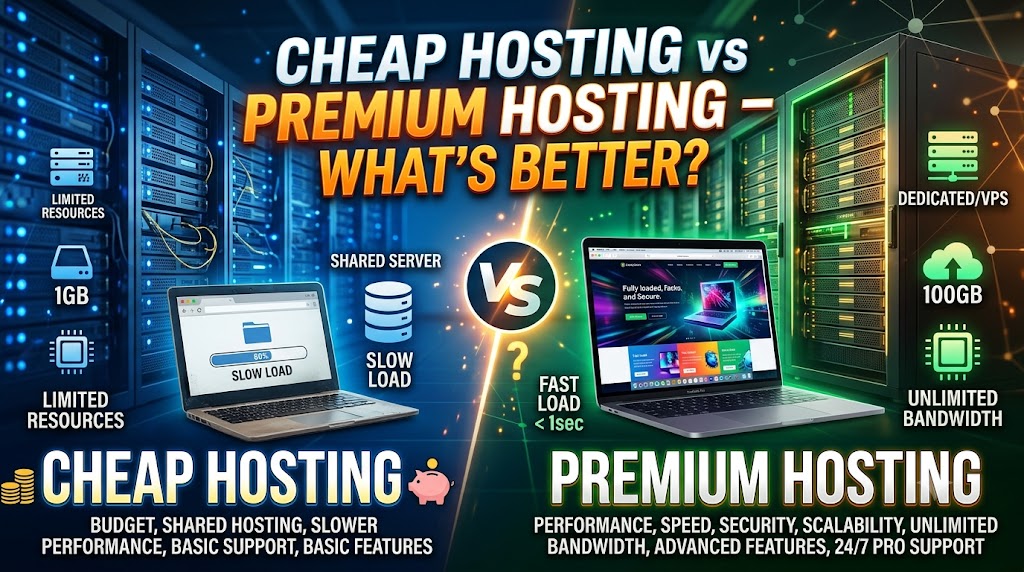
Shared hosting is the most affordable option and is ideal for beginners or small businesses. In this setup, multiple websites share the same server resources such as CPU, RAM, and bandwidth.
While it’s cost-effective, shared hosting can become slow if other websites on the same server consume too many resources. It is suitable for blogs, portfolio websites, and small business websites with low traffic.
VPS Hosting (Virtual Private Server)
VPS hosting offers a middle ground between shared and dedicated hosting. Although multiple websites still share a physical server, each website gets dedicated resources through virtualization.
This results in better performance, improved security, and more control compared to shared hosting. VPS hosting is ideal for growing businesses that need more stability and customization.
Cloud Hosting
Cloud hosting is one of the most popular choices in 2026 due to its flexibility and scalability. Instead of relying on a single server, your website is hosted across multiple servers connected in a cloud network.
This means if one server fails, another takes over, ensuring maximum uptime. Cloud hosting is perfect for businesses experiencing fluctuating traffic or planning rapid growth.
Dedicated Hosting
Dedicated hosting provides an entire server exclusively for your website. This offers maximum performance, control, and security.
However, it is also the most expensive option and requires technical expertise to manage. Dedicated hosting is best suited for large businesses, enterprise websites, and platforms with very high traffic.
Key Factors to Consider When Choosing a Hosting Plan
Website Performance and Speed
Website speed is critical for both user experience and SEO. Studies show that users leave websites that take more than a few seconds to load. A good hosting provider should offer fast servers, SSD storage, and optimized performance features.
Uptime Guarantee
Uptime refers to the amount of time your website is accessible online. Most reliable hosting providers offer at least 99.9% uptime.
Scalability
As your business grows, your website traffic will increase. Your hosting plan should be able to handle this growth without requiring a complete migration.
Security Features
Cybersecurity threats are increasing every year, making website security more important than ever.
Customer Support
Technical issues can arise at any time, and having reliable customer support is essential.
Pricing and Value for Money
While pricing is important, it should not be the only deciding factor.
Matching Hosting with Business Type
Different businesses have different hosting needs. Understanding this can help you make a better decision.
Common Mistakes to Avoid
Many businesses make the mistake of choosing hosting based solely on price.
SEO Benefits of Choosing the Right Hosting
Your hosting plan plays a significant role in SEO performance.
Future Trends in Web Hosting (2026 and Beyond)
Web hosting is evolving rapidly with advancements in technology.
Final Thoughts
Choosing the right hosting plan is not just a technical decision—it’s a business investment.
Ready to Get Started?
If you’re looking for reliable, fast, and scalable hosting solutions tailored for your business:
Check our hosting plans