Choosing the right web hosting service is one of the most important decisions for any website owner. Whether you're launching a personal blog, an online store, or a high-traffic web app, your host directly shapes your site's speed, security, uptime, and user experience.
Many beginners face a common dilemma: should you choose cheap hosting or invest in premium hosting? Low-cost plans are attractive because of their price tags, but premium hosting often delivers better performance, stronger security, and more capable support. The right answer depends on your website's goals, traffic, and budget — this guide walks through each factor so you can decide with confidence.
01Understanding Cheap Hosting
What cheap hosting actually gives you
Cheap hosting refers to plans designed to be affordable for individuals, beginners, startups, and small businesses — typically a few dollars a month, with enough resources to run a basic website.
Most budget plans use shared hosting environments, where hundreds or even thousands of websites split the same server resources. That shared infrastructure is exactly what lets providers keep prices low.
It's a solid fit for websites with low to moderate traffic that don't need heavy computing resources — personal blogs, portfolios, student projects, and small informational sites usually run just fine on an affordable plan.
03Performance Comparison
Speed: the difference visitors actually feel
Page speed matters for both user experience and search rankings — Google treats loading speed as a real ranking factor, which makes hosting quality a genuine SEO consideration, not just a technical detail.
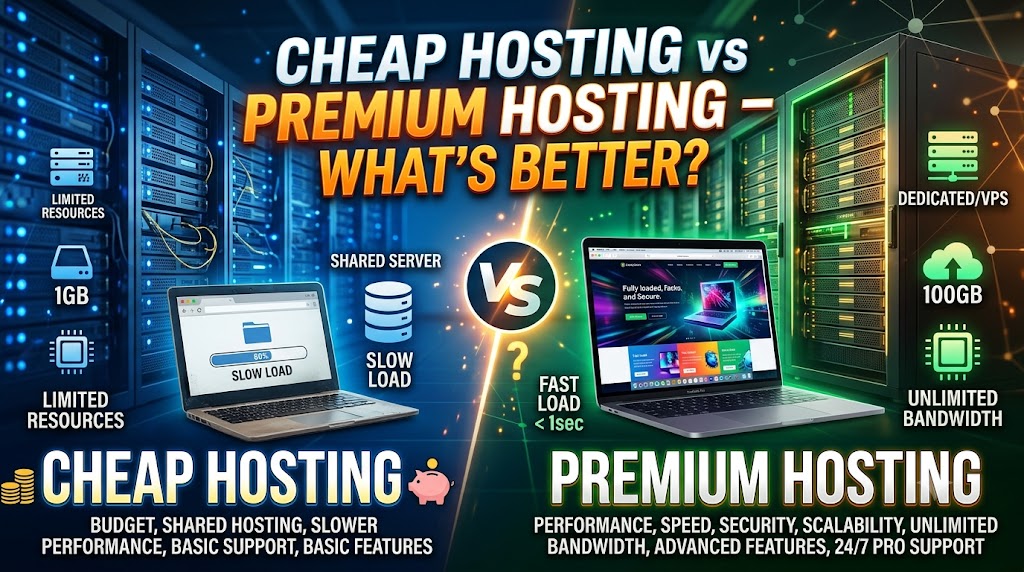
Cheap plans place many websites on one server. During peak traffic, those shared resources get stretched thin, causing slower loads and inconsistent performance.
Premium hosting runs on more powerful hardware with optimized configurations and fewer accounts per server, often layering in LiteSpeed, NVMe SSDs, built-in CDN, advanced caching, and tuned PHP environments — the result is noticeably faster load times, better visitor satisfaction, and higher conversion rates.
04Uptime and Reliability
Staying online when it counts
Budget hosts often advertise 99.9% uptime, but real-world performance can vary with server load and maintenance quality — since many sites share the same hardware, one resource-heavy neighbor can drag everyone else down.
Premium providers invest in redundant infrastructure, multiple power supplies, enterprise networking, and automatic failover, which keeps your site reachable even when something goes wrong behind the scenes.
For online stores, SaaS platforms, and client portals, reliable uptime isn't a nice-to-have — every minute offline can cost revenue and customer trust.
05Security Features
Protection that scales with the risk
Cheap hosting generally covers the basics — a free SSL certificate and simple malware scanning — while advanced protection is often locked behind paid add-ons.
Premium hosting typically layers in proactive malware detection, advanced firewalls, DDoS protection, automatic backups, server monitoring, and vulnerability scanning, often backed by round-the-clock server monitoring that catches threats before they reach customers.
If your site handles customer data or payments, that extra layer of security buys real peace of mind.
06Customer Support
Who answers when something breaks
Many budget hosts route support through ticket systems or live chat with longer response times — serving huge customer bases at low prices means support quality can be uneven.
Premium hosting companies tend to staff experienced support engineers available 24/7 across chat, email, and phone, able to help with migrations, performance tuning, and genuinely complex server issues.
When downtime is costing you money, fast, capable support stops being a luxury and starts being an investment.
07Scalability
Growing without moving house
Every successful website eventually outgrows its starting point. Cheap plans come with limited CPU, RAM, storage, and bandwidth, so growth tends to show up as slower pages or resource-limit warnings.
Premium hosting is built to scale — many providers let you upgrade resources instantly, without migrating platforms. Cloud, VPS, and managed hosting can absorb sudden traffic spikes while keeping performance steady, which matters a lot if you're planning for long-term growth.
08Pricing Considerations
What the sticker price doesn't show
Price is usually the deciding factor for beginners, and cheap plans start low enough to make that first website easy to justify. But backups, security, email, migrations, and performance upgrades can quietly add up over time.
Premium hosting asks for a bigger monthly commitment up front, but often bundles automated backups, enhanced security, premium support, CDN integration, staging environments, and performance tools into the price.
09SEO Benefits of Premium Hosting
Hosting is part of your SEO stack
Google rewards sites that load quickly, stay consistently available, and deliver a good experience. Premium hosting supports all three — faster load times, less downtime, better Core Web Vitals, and steadier overall performance.
Faster sites also tend to keep visitors around longer and lower bounce rates, which sends positive engagement signals back to search engines. Content is still the biggest SEO lever, but hosting is the technical floor everything else stands on.
10Who Should Choose What
Matching the plan to the website
Starting out, low traffic
- First blog or portfolio site
- Learning WordPress or testing an idea
- Small informational site with limited visitors
- Tight budget, low financial risk if things go wrong
Revenue depends on the site
- Online stores and membership sites
- Business portals, agencies, corporate sites
- SaaS apps and high-traffic platforms
- Any site where downtime costs real money