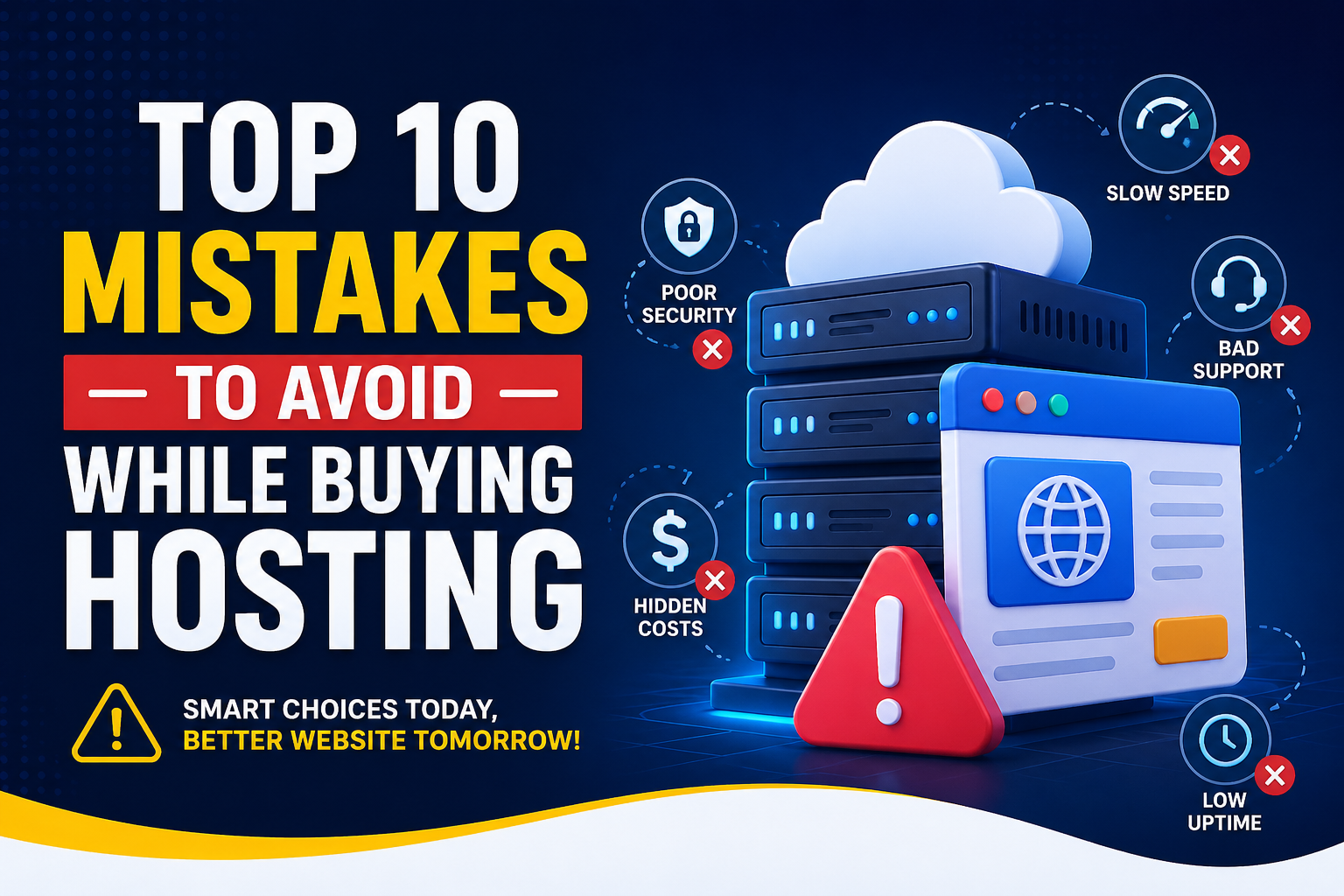
Top 10 Mistakes to Avoid While Buying Hosting in 2026
Choosing the right web hosting is one of the most important decisions when building a website. Whether you are launching a personal blog, business website, eCommerce store, or portfolio, your hosting provider directly impacts website speed, uptime, security, SEO rankings, and user experience.
Many beginners make the mistake of selecting hosting based only on price or flashy offers. Later, they face slow loading times, frequent downtime, poor customer support, and security issues. In this guide, we will cover the top 10 mistakes to avoid while buying hosting so you can make a smarter decision for your website in 2026.
If you are looking for reliable hosting services, platforms like Data Paradise offer multiple solutions including shared hosting, VPS hosting, cloud hosting, WordPress hosting, and dedicated servers.
Why Choosing the Right Hosting Matters
Your hosting is the foundation of your website. Even the best-designed website can fail if your hosting is slow or unreliable. Search engines like Google consider page speed, uptime, and user experience as important ranking factors. A poor hosting choice can hurt your SEO efforts and reduce conversions.
A fast and secure hosting provider ensures your visitors get a smooth experience, your website stays online, and your data remains protected.
1. Choosing Hosting Only Based on Price
One of the biggest mistakes people make is buying the cheapest hosting plan available.
Low-cost hosting may look attractive, especially for beginners. Many providers advertise hosting plans for very low monthly rates, but these prices often come with limitations such as reduced storage, lower bandwidth, slower servers, and limited support.
Cheap hosting can also mean overcrowded shared servers where hundreds of websites compete for the same resources. This results in slower loading times and poor performance.
Instead of focusing only on price, compare what is included in the plan such as SSD storage, free SSL, backups, uptime guarantee, customer support, and scalability.
Remember: cheap hosting today can become expensive later if your website suffers downtime or migration issues.
2. Ignoring Website Requirements
Not every website needs the same hosting solution.
A beginner blog has different requirements compared to an eCommerce store or a high-traffic business website. Many users buy hosting without understanding what their website actually needs.
Before purchasing hosting, ask yourself:
- How much traffic do you expect?
- Will you upload heavy images or videos?
- Do you need WordPress hosting?
- Are you planning to run an online store?
For example, a small blog can start with shared hosting, but a growing business website may need VPS hosting or cloud hosting for better performance.
Understanding your website requirements helps avoid overspending or underestimating your hosting needs.
3. Not Checking Uptime Guarantee
Website downtime can damage your reputation and revenue.
Many buyers ignore uptime guarantees while selecting hosting. Uptime refers to how often your website remains online and accessible.
A reliable hosting provider should offer at least 99.9% uptime guarantee. Anything lower can mean your website may frequently go offline.
Downtime affects:
- SEO rankings
- Sales and leads
- Customer trust
- Website accessibility
Always check the provider’s uptime history, server reliability, and reviews before buying.
4. Overlooking Customer Support Quality
You may not think customer support matters until your website suddenly crashes at 2 AM.
Poor support is one of the most frustrating hosting problems. Many low-quality hosting companies provide delayed or unhelpful responses.
Before purchasing hosting, check whether the provider offers:
24/7 live chat support, ticket support, phone assistance, and technical expertise.
A hosting provider with responsive customer support can save hours of stress during emergencies.
Look for reviews specifically mentioning support quality.
5. Ignoring Server Location
Server location affects website loading speed.
If your target audience is in India but your hosting server is located in another continent, your website may load slower for local visitors.
Many buyers ignore this factor and later struggle with slow website performance.
Choose hosting with server locations near your target audience or providers that offer CDN integration.
For example:
- Indian audience → India or Singapore servers
- USA audience → US servers
- Global audience → Cloud hosting + CDN
Faster loading improves both SEO and user experience.
6. Not Checking Scalability Options
Many beginners buy hosting only for current needs and forget future growth.
Your website may start small, but traffic can increase quickly after successful SEO, ads, or viral marketing campaigns.
If your hosting plan does not allow easy upgrades, migration becomes complicated and risky.
A good hosting provider should allow smooth upgrades from:
Shared Hosting → VPS Hosting → Cloud Hosting → Dedicated Server
Scalable hosting ensures your website grows without technical limitations.
7. Ignoring Security Features
Cybersecurity threats are increasing every year.
Many people purchase hosting without checking included security features. This is risky because websites are frequent targets of malware, hacking attempts, brute force attacks, and spam.
Essential hosting security features include:
Free SSL certificate, malware scanning, DDoS protection, firewalls, daily backups, and two-factor authentication.
Without proper security, your website data and customer information may be compromised.
Security should never be treated as optional.
8. Not Reading Renewal Pricing
Hosting companies love low introductory prices. That’s the classic marketing trick: lure you in with ₹99/month, then surprise you later like an unexpected exam result.
Many buyers focus only on first-year discounts and ignore renewal costs.
A hosting plan that looks cheap initially may renew at 2x or 3x the original price.
Before purchasing, check:
- Renewal rates
- Domain renewal charges
- SSL renewal cost
- Backup charges
- Migration fees
Always calculate long-term cost instead of only initial pricing.
9. Choosing the Wrong Hosting Type
Many beginners do not understand different hosting types.
This leads to buying unsuitable hosting plans.
Shared Hosting
Best for beginners, blogs, and low-traffic websites.
VPS Hosting
Better performance and control for growing businesses.
Cloud Hosting
High scalability, flexibility, and uptime for modern websites.
Dedicated Hosting
Maximum resources and control for large businesses and enterprise projects.
WordPress Hosting
Optimized specifically for WordPress websites.
Buying the wrong hosting type can either waste money or limit performance.
Choose based on business size, traffic, and technical needs.
10. Not Reading Real Customer Reviews
Never rely only on advertisements.
Hosting companies often promote only positive features. Real customer reviews reveal the actual experience.
Before purchasing hosting, check:
- Google reviews
- Trustpilot reviews
- Reddit discussions
- Hosting forums
- Social media feedback
Look for recurring complaints about downtime, poor support, billing issues, or slow speed.
Real reviews provide practical insights that marketing pages never mention.
Final Thoughts
Buying hosting is not just about finding the lowest price. It is about building a strong foundation for your website’s speed, SEO, security, and future growth.
By avoiding these top 10 mistakes while buying hosting, you can save money, avoid technical problems, and create a better experience for your visitors.
Take time to compare hosting providers carefully, review long-term costs, and choose a plan based on your actual requirements.
A smart hosting decision today can save you countless headaches tomorrow.
If you are planning to launch or upgrade your website in 2026, make hosting quality your priority.
Choose wisely. Your website deserves better than bargain-bin hosting held together by digital duct tape.